 Kids’ · KEEN
KEEN Newport H2 — Kids
View on Amazon ↗Ventilated sandal construction for wet-to-dry outings.
Consider: Openings can admit grit; confirm heel security and toe coverage.
Kids’ water shoes need to stay on through the activities your child actually does: camp walks, splash pads, pool visits, or beach exploring. Compare closures children can manage with soles appropriate for those surfaces. The best choice for a short swim may be too slight for an afternoon of walking.
Read the full buying guide ↓As an Amazon Associate, we may earn from qualifying purchases.
Compare styles here, then select the exact size and color on Amazon. Availability and sellers can change.
Kids’ · KEENVentilated sandal construction for wet-to-dry outings.
Consider: Openings can admit grit; confirm heel security and toe coverage.
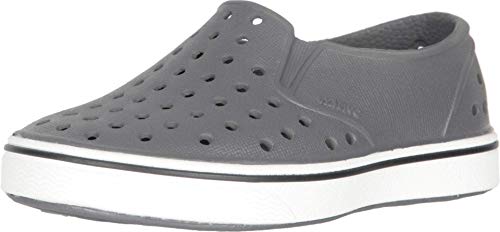 Kids’ · Native Shoes
Covered water footwear to compare for the activities listed below.
Consider: Check the model’s size chart, closure and outsole before choosing.
 Kids’ · KEEN
Ventilated sandal construction for wet-to-dry outings.
Consider: Openings can admit grit; confirm heel security and toe coverage.
 Kids’ · ChayChax
Ventilated sandal construction for wet-to-dry outings.
Consider: Openings can admit grit; confirm heel security and toe coverage.
 Kids’ · Stelle
Covered water footwear to compare for the activities listed below.
Consider: Check the model’s size chart, closure and outsole before choosing.
 Kids’ · Native Shoes
Covered water footwear to compare for the activities listed below.
Consider: Check the model’s size chart, closure and outsole before choosing.
 Kids’ · Stelle
Ventilated sandal construction for wet-to-dry outings.
Consider: Openings can admit grit; confirm heel security and toe coverage.
 Kids’ · SEEKWAY
Covered water footwear to compare for the activities listed below.
Consider: Check the model’s size chart, closure and outsole before choosing.
Have your child put the shoes on and fasten them without help if that is what camp or school will require. A broad opening can make dressing easier, while a strap gives an adult an obvious way to check that the foot is held securely.
Inspect dangling cord ends and straps after fastening. They should not trail under the sole. If the opening is difficult to manage while dry, consider how your child will handle it with damp feet and sandy hands.
Measure both feet and follow the model’s children’s sizing instructions. Leave the toe room specified by the manufacturer, but avoid adding so much growing space that the heel lifts or the sole twists under the foot. Adult and youth numbers can overlap, so read the size category carefully.
Ask your child to walk and turn indoors. Look for toe contact at the front, side pressure, and repeated attempts to kick the shoes off. Younger children may describe all of these simply as the shoes feeling strange.
Read the activity list before choosing a thin aqua sock. If children will move between playgrounds, trails, and water, a more covered shoe with an adjustable fastening may be the more practical option. Confirm the program’s footwear rules. Label the shoes where permitted, and choose a pair you can open and inspect for trapped sand after use.