 Kids’ · KEEN
KEEN Newport H2 — Kids
View on Amazon ↗Ventilated sandal construction for wet-to-dry outings.
Consider: Openings can admit grit; confirm heel security and toe coverage.
River footwear should be chosen for the entry, bank, and planned activity, not simply for its ability to get wet. Compare secure closures, toe coverage, and underfoot construction. A shoe for a gentle maintained access point may be a poor choice for a rough approach or a guided trip with specific requirements.
Read the full buying guide ↓As an Amazon Associate, we may earn from qualifying purchases.
Compare styles here, then select the exact size and color on Amazon. Availability and sellers can change.
Kids’ · KEENVentilated sandal construction for wet-to-dry outings.
Consider: Openings can admit grit; confirm heel security and toe coverage.
 Men’s · ALEADER
Covered water footwear to compare for the activities listed below.
Consider: Check the model’s size chart, closure and outsole before choosing.
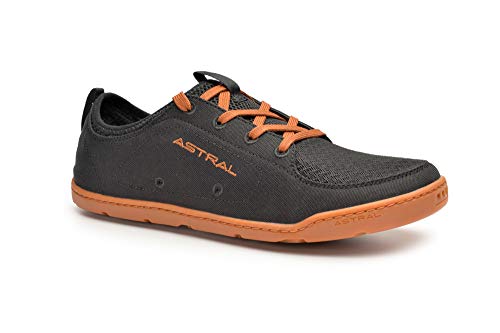 Men’s · Astral
Low-profile water sneaker for paddling and shore use.
Consider: Less cushioning than a structured walking shoe.
 Adult unisex · SITAILE
Covered water footwear to compare for the activities listed below.
Consider: Check the model’s size chart, closure and outsole before choosing.
Unisex listing: check the men’s/women’s size conversion on Amazon.
 Men’s · KEEN
Closed-toe water sandal with adjustable retention for mixed shore and walking days.
Consider: Open sides let small stones and sand enter.
 Men’s · Xero Shoes
Minimalist amphibious shoe for shoppers who already prefer a flexible, low-profile sole.
Consider: Not a cushioned substitute for a hiking boot.
 Kids’ · KEEN
Ventilated sandal construction for wet-to-dry outings.
Consider: Openings can admit grit; confirm heel security and toe coverage.
 Adult unisex · Astral
Lace-up water sneaker to compare for paddling and wet approaches.
Consider: Confirm the listing’s adult size conversion before ordering.
Unisex listing: check the men’s/women’s size conversion on Amazon.
 Kids’ · Stelle
Ventilated sandal construction for wet-to-dry outings.
Consider: Openings can admit grit; confirm heel security and toe coverage.
 Women’s · Dannto
Ventilated sandal construction for wet-to-dry outings.
Consider: Openings can admit grit; confirm heel security and toe coverage.
 Women’s · Astral
Women’s water sneaker for paddling trips that include walking to the launch.
Consider: Check the women’s size chart rather than copying a size from the men’s Brewer.
 Women’s · Vibram
Five-toe amphibious design for shoppers who prefer individual toe pockets and a minimal feel.
Consider: Each toe must fit its pocket; this shape will not suit every foot.
 Women’s · KEEN
Closed-toe water sandal with an adjustable bungee fit and open drainage.
Consider: The open sides admit sand and small stones; stop to clear them rather than walking through rubbing.
 Men’s · KEEN
Lower-profile closed-toe sandal for walking between wet and dry surfaces.
Consider: Less enclosed than a shoe; debris can enter through the side openings.
 Men’s · Body Glove
Water sneaker with a reinforced toe area to compare for beach launches and kayaking.
Consider: Try its bulk in your boat’s foot space before a long outing.
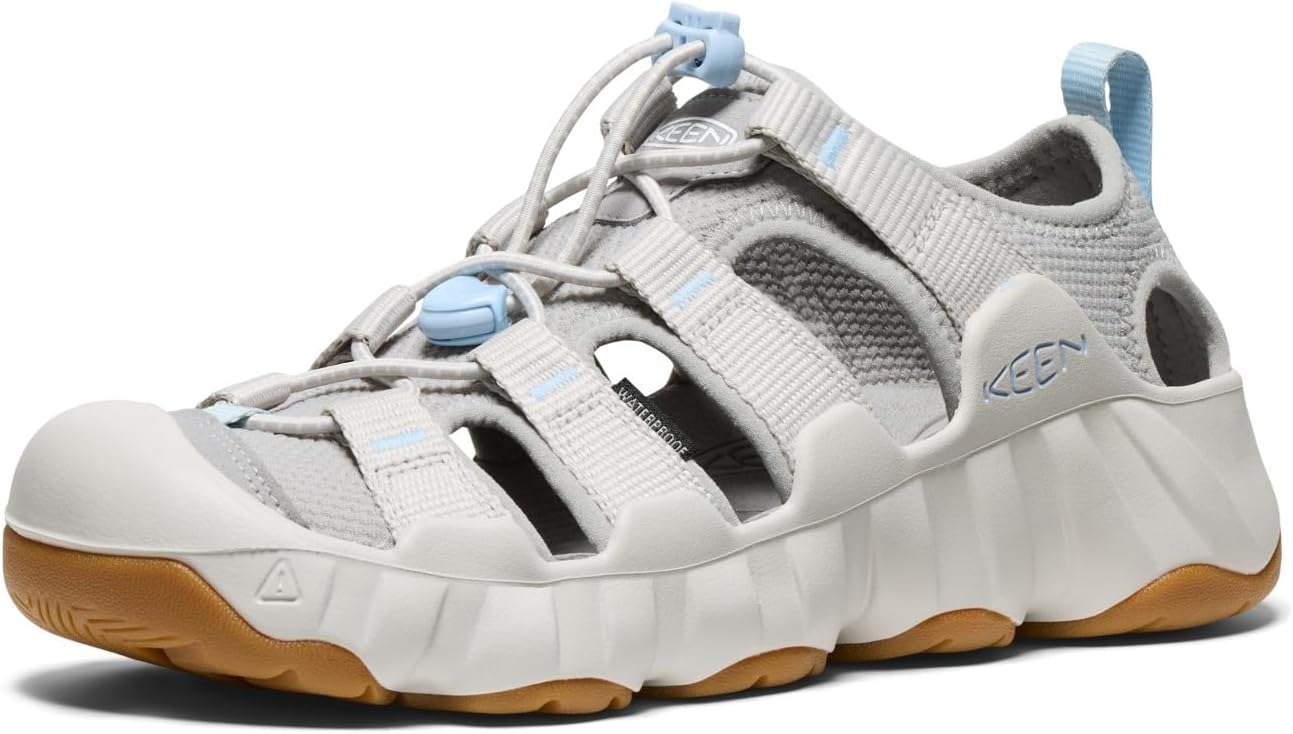 Women’s · KEEN
Women’s cushioned closed-toe water sandal for mixed walking and water days.
Consider: The substantial sandal platform takes more luggage space than an aqua sock.
 Women’s · KEEN
Women’s version of the Newport H2 with a covered toe and open sandal sides.
Consider: Use the women’s fit chart; do not assume the men’s version has the same shape.
 Women’s · KEEN
Women’s lower-profile closed-toe water sandal for shoreline walking.
Consider: Open sides simplify draining but cannot keep fine sand out.
 Men’s · Merrell
Amphibious hiking shoe for routes that alternate dry trail and water crossings.
Consider: More structured than a swim sock; choose it for the walking portion of the trip.
 Men’s · Merrell
Open-sided hiking-water design for shoppers deciding between a shoe and a sandal.
Consider: Compared with an enclosed upper, openings expose more of the foot to grit.
 Men’s · KEEN
Men’s cushioned water sandal with a covered toe for mixed shore and walking use.
Consider: Try the sole height and fit on uneven ground before committing to a longer route.
If you are joining a guided outing, ask what footwear the operator accepts before shopping. “Water shoes” can mean a thin slipper, a sandal, or a paddling boot, and those are not interchangeable. Check whether the approach includes substantial walking.
For a trip you organize yourself, identify the terrain you can assess reliably. Footwear cannot establish whether a river crossing or a current is safe. Do not use a grippy-looking outsole as a reason to enter uncertain water.
Check the heel and midfoot together. The upper should stay aligned with the sole when you step sideways and lift the heel during an indoor fitting. A closure that only tightens around the ankle may leave the rest of the shoe loose.
Inspect how excess laces or straps are secured. Choose a shoe that fits before tightening it rather than using maximum closure tension to compensate for an oversized shape.
Open sandals are simple to rinse but leave gaps for stones. Enclosed uppers provide more coverage, yet grit can enter at the collar and remain inside. Consider how easily you can remove and clear the shoe at a suitable stopping point. For rough approaches, inspect the sole and toe reinforcement independently; neither the river label nor the presence of drainage holes tells you how substantial that protection is.