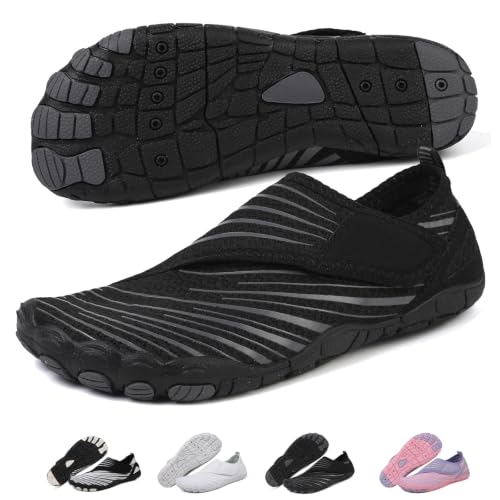
Specialist collectionWide Water Shoes
Wide Water Shoes should be selected for shoppers needing extra forefoot room, not simply because a listing says “water-ready.” This collection focuses on roomier wet footwear for wet settings where forefoot swelling and side pressure become noticeable. The strongest options balance broad toe box, adjustable upper, and no side pressure; the right balance changes with the surface, time spent walking, and how often the shoe moves between wet and dry ground.
wide water shoeswide width water shoeswater shoes wide
As an Amazon Associate, we may earn from qualifying purchases.
4 verified products to compare
Availability, variants and sellers change. Compare each product family here, then confirm the exact size, color and current listing details on Amazon.
StelleStelle Kids Water Shoes Wide Toe Box Quick Dry Barefoot | Non-Slip Aqua Shoes, Breathable Mesh Upper for Beach, Swim, Pool and Outdoor Play, Fits Toddler to Big Kids
Verified from the official Amazon US product page; selected variant ASIN/image.
- Check broad toe box
- Check adjustable upper
- Check no side pressure
View on Amazon ↗
KUKTOKUKTO Men's Women's Barefoot Beach Sandals
Wide fit, adjustable straps, toe protection and removable arch-support insole.
- Check broad toe box
- Check adjustable upper
- Check no side pressure
View on Amazon ↗
SEEKWAYSEEKWAY Barefoot Water Shoes for Kids - Wide Toe Box and Quick-Dry Sand Shoes Toddler for Hiking Swim Beach Pool Kayak Sport Accessories, Camping Essentials Non-Slip for Boys Girls Sizes
Verified from the official Amazon US product page; selected variant ASIN/image.
- Check broad toe box
- Check adjustable upper
- Check no side pressure
View on Amazon ↗
BiurnyxBiurnyx Barefoot Shoes for Women Men, Voyabarefoot Watershoes Wide Toe Box Zero Drop Lightweight Walking Sneakers
Verified from one official Amazon US page: exact product title and brand byline, selected purchasable ASIN, productImageUrl, and water-shoe classification. The listing offers up to women's US 16 / men's US 14.
- Check broad toe box
- Check adjustable upper
- Check no side pressure
View on Amazon ↗Choose Wide Water Shoes for the actual setting
Start by naming the hardest part of the day. Around wet settings where forefoot swelling and side pressure become noticeable, that may be heat, loose debris, current, polished flooring, or distance on dry ground. A shoe that feels excellent for a brief swim can be inadequate when the itinerary includes a long approach. Conversely, a bulky trail-oriented design can feel unnecessarily stiff in a pool. Use the most demanding surface—not the easiest one—to set the minimum level of protection and structure.
Read product construction in practical terms. broad toe box matters when the foot must stay controlled, while adjustable upper determines how the shoe behaves after saturation. no side pressure becomes important when terrain or duration exposes the weakness of a basic aqua sock. Avoid treating “non-slip,” “barefoot,” or “quick-dry” as guarantees. Those labels describe an intention; outsole geometry, material, closure, and fit determine how the shoe actually behaves.
Fit priorities for shoppers needing extra forefoot room
Fit wide water shoes with both feet measured and the intended sock choice decided in advance. The toes should lie naturally without hitting the front, and the widest part of the foot should align with the widest part of the shoe. Wet uppers may relax, so a loose dry fit rarely improves in water. At the same time, pressure across the forefoot is not useful security and can become more distracting as feet swell.
Check retention with realistic movements: rise onto the toes, step sideways, walk down a clean incline, and simulate climbing a ladder or pushing off from shore. The heel should not repeatedly lift, the upper should not twist independently of the sole, and the closure should remain comfortable. For wet settings where forefoot swelling and side pressure become noticeable, fit errors often reveal themselves as rubbing, debris entry, or a shoe that shifts precisely when dependable footing matters most.
Traction, protection, and drainage
For this collection, traction should be judged against wet settings where forefoot swelling and side pressure become noticeable. Broad rubber contact can help on smooth stone, directional lugs can improve purchase on loose ground, and a stable platform can be more valuable than an aggressively sculpted but flexible outsole. No tread makes algae, polished tile, or moving rock risk-free. Shorten steps, test each foothold, and use hand support where available.
adjustable upper should move water out without making the sole vulnerable. Drainage ports are useful when protected by an outsole and internal screen; exposed openings can admit grit or transmit sharp pressure. Mesh releases heat and water efficiently but can collect fine sand. Denser uppers limit some debris but stay damp longer. For wide water shoes, choose the drainage method that matches the material most likely to enter the shoe.
Care and replacement decisions
For wide water shoes, after use in salt, chlorine, mud, or fine sand, rinse the shoes with fresh water and remove loose insoles if the maker permits. Open the collar and closure, shake out hidden debris, and air-dry in moving room-temperature air. High heat can distort foam and compromise adhesives. Neoprene and padded collars need particular attention because the exterior may feel dry while inner layers still hold moisture.
Inspect broad toe box, adjustable upper, and no side pressure before the next trip. Replace the pair when tread is polished smooth, a sole separates, closures no longer retain the foot, or the upper develops a hole that admits debris. Calendar age is less useful than condition. A lightly used pair stored dry may last well, while repeated abrasion on wet settings where forefoot swelling and side pressure become noticeable can consume an outsole much sooner.
Frequently asked questions
What matters most in wide water shoes?
Match broad toe box, adjustable upper, and no side pressure to wet settings where forefoot swelling and side pressure become noticeable. Fit and surface compatibility matter more than a broad marketing label.
How should wide water shoes fit when wet?
For wide water shoes, securely at the heel and midfoot, with toes lying naturally and no painful side pressure. Expect some uppers to relax slightly after saturation.
What should shoppers avoid?
For wide water shoes, avoid loose heels, folding insoles, exposed drainage that feels sharp underfoot, and outsole claims that do not explain the tread or rubber construction.
How should this collection connect to the main guide?
For wide water shoes, use the WaterShoes.app homepage to compare categories, then return here when this specific fit, activity, or surface matches the planned use.
← All water shoe collections