Can You Wear Water Shoes Every Day?
You can wear a comfortable water shoe for everyday casual use, but thin swim slippers are a poor default for long pavement days. Compare a water sneaker or structured sandal if you need one pair for shore visits and errands, and let wet footwear dry between uses.
Decide whether water shoes make sense as daily footwear by separating occasional errands from long walking days and choosing the right construction.
As an Amazon Associate, we may earn from qualifying purchases.
Everyday use is a schedule, not a shoe feature
Someone walking from a car to a pool has different needs from someone spending hours on city sidewalks. Both may describe the plan as everyday wear. Write down the longest ordinary part of your day before choosing: the commute, time standing at work, or an evening walk may matter more than the brief visit to the water.
A shoe that is comfortable for that routine can be worn casually regardless of its water-shoe label. The label does not guarantee the opposite either. Test the actual pair for the dry portion of your day instead of assuming a flexible beach slipper will feel like your usual walking shoes.
Water sneakers offer the closest crossover
A model such as Columbia Tamiami PFG has a shoe-like format designed around boating use, while Astral Loyak offers a low-profile water-sneaker approach. They illustrate why the category is broader than thin aqua socks. Compare their construction with what you already enjoy wearing rather than expecting identical underfoot feel.
The key compromise is that water features do not always help on land. Drainage openings may admit water when you step into a puddle, and an airy upper can feel exposed in cooler conditions. If you want dry feet in wet weather, a draining shoe solves a different problem from a waterproof one.
Thin swim footwear has a narrower daily role
A minimal water sock may be convenient in a changing room or for a short beach crossing. That does not make it the best choice for repeated hard-surface walking. If you start shortening your stride, avoiding normal surfaces or seeking places to sit because the sole feels insufficient, choose more substantial footwear for that part of the day.
You do not need to force adaptation to justify a purchase. Keep the thin pair for the activity where it works well. Carrying two specialized pairs can be more convenient than spending an entire day compensating for one compromise.
Let appearance follow the actual requirements
Some shoppers prefer a water sneaker because it looks appropriate for a café or casual errand. That is a reasonable preference, but dress expectations at a workplace or venue still apply. A closed toe alone does not establish that the shoe meets occupational footwear requirements.
Consider the practical mess too. A shoe full of beach sand is not ready to become indoor footwear without a rinse or shake-out. Separate the transition into two steps: remove debris first, then decide whether the pair is dry and comfortable enough for the next destination.
Build a drying gap into repeated wear
Daily use becomes less appealing when yesterday's lining is still damp. Open the pair after each wet outing and remove the insert if designed to detach. Check the toe and heel before wearing it again, and rotate to another pair when necessary. Putting damp shoes on a radiator is not a substitute for a workable routine.
Socks may improve comfort for some land use, but they change fit. Try the complete combination instead of stuffing a thick everyday sock into a shoe sized closely for bare feet. If the lining rubs, determine whether the problem is a seam, grit or movement before assuming a sock will cure it.
Watch what wears first
Repeated pavement use can expose different weaknesses from occasional swimming. Inspect the sole, heel lining and closure regularly. A smooth worn patch, loose sole edge or insole that keeps folding is a reason to reassess the pair. Do not keep using it in the water simply because it has been demoted from everyday duty.
When replacing the shoe, choose according to the task that occupies most of your time. If daily walking dominates and water visits are occasional, a normal walking shoe plus a compact water pair may be the more satisfying combination.
Compare the product listings
Research-based options, not a hands-on test ranking. Confirm size, color and current availability on Amazon.
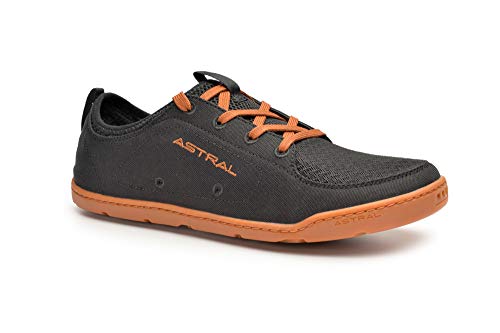 Men’s · Astral
Astral Loyak — Men
View on Amazon ↗Low-profile water sneaker for paddling and shore use.
Consider: Less cushioning than a structured walking shoe.
Questions about this topic
Can water shoes be my only vacation shoes?
Possibly for a very water-centered trip, but consider long sightseeing days, venue requirements and drying time. A spare walking pair often reduces compromises.
Are water shoes waterproof for rainy errands?
Usually draining water shoes are not. Openings that release water can also admit it.
Can I wear them to work?
Only if they meet the workplace’s dress and footwear requirements. Casual water footwear is not automatically occupational footwear.
Use water shoes daily when the actual pair is comfortable for the dry part of your routine. Keep swim slippers for short duties and give any repeatedly wet pair a genuine drying break.
Use the water shoe finder →Continue your research
For a broader comparison, use our water shoes finder and catalog.